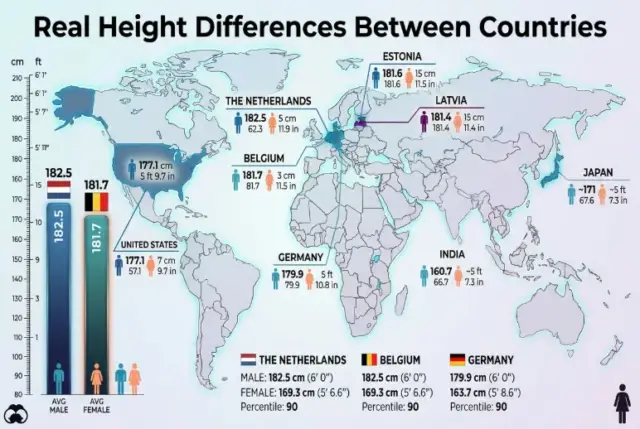
Real Height Differences Between Countries: Visual Guide (2026)
Why are some countries taller than others, and what do those height difference really look like?…
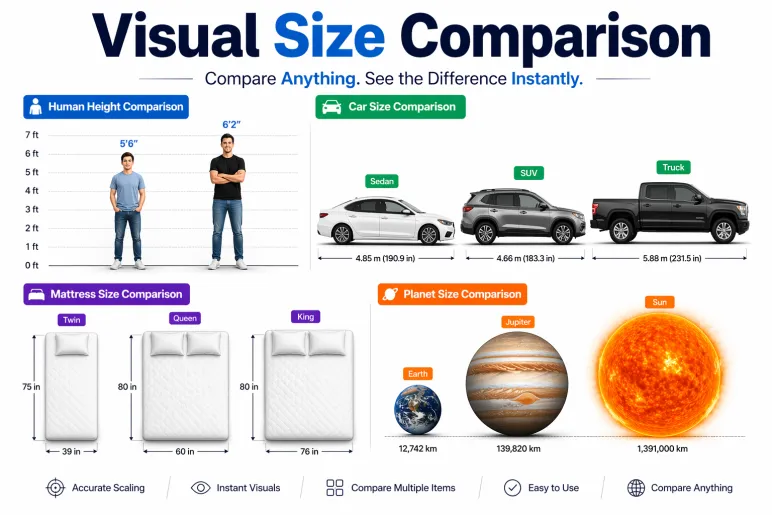
Numbers can tell you something — but visuals make you understand.
If someone says an object is “200 cm tall” or a car is “4.5 meters long,” your brain still has to imagine what that means. And most of the time, that imagination is inaccurate.
That’s where visual size comparison changes everything.
Instead of guessing, you can see the difference instantly—whether you’re comparing people, objects, buildings, vehicles, or even planets.
In this complete guide, you’ll learn:
Visual size comparison is the process of comparing two or more objects using scaled visual representation instead of raw measurements.
Instead of:
You see:
That immediate understanding is what makes it powerful.
The human brain processes visuals 60,000 times faster than text.
That means:
This is why:
Visual comparison is not just for fun — it has real-world applications.
When buying:
Seeing size differences helps you:
You can compare:
This helps avoid costly errors.
Students understand better when they can:
Visual comparisons are:
Examples:
Now let’s get practical.
You can compare:
Use:
Accuracy = better visualization.
Tools like Jushify allow you to:
Look for:
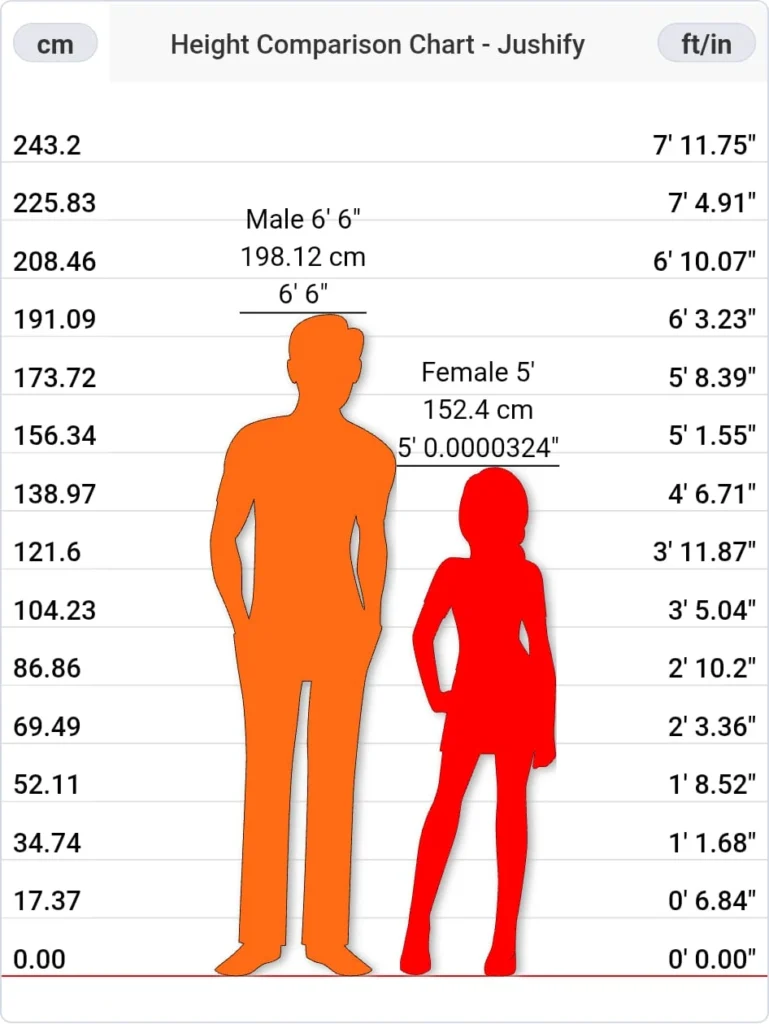
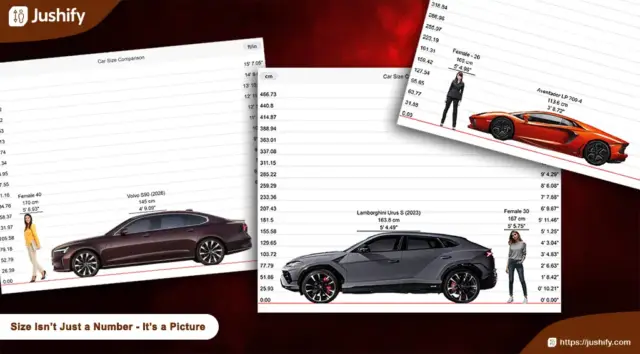
Comparing:
Looks like:
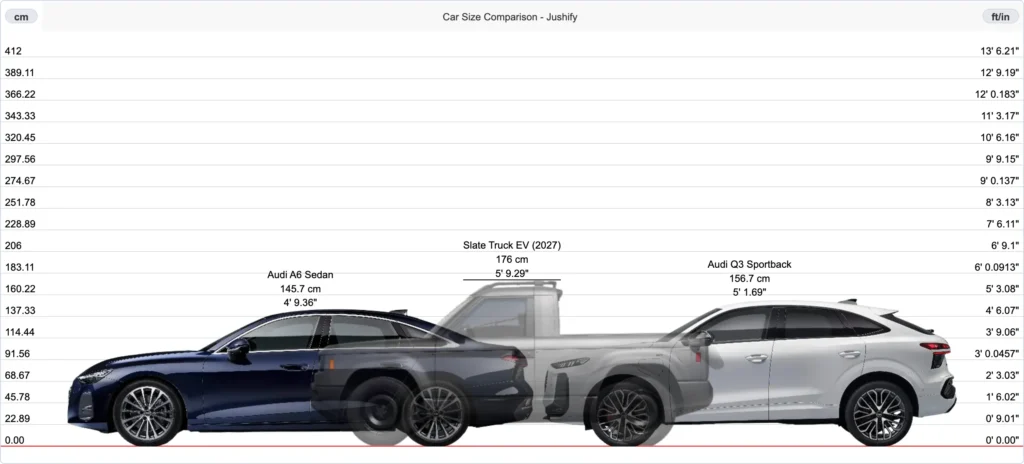
Comparing:
Helps you understand:
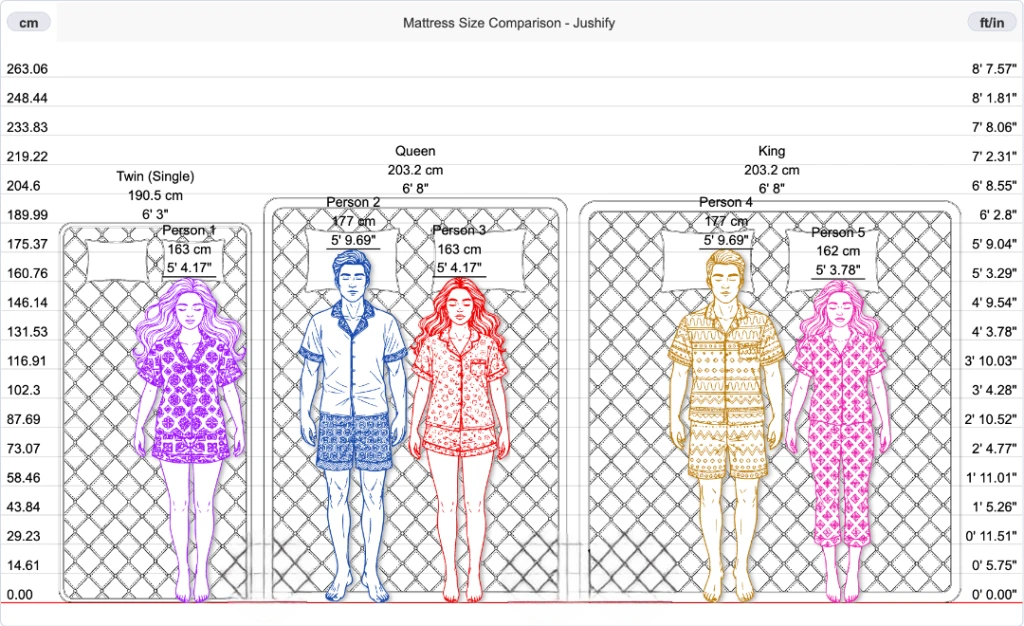
Comparing:
Helps decide:
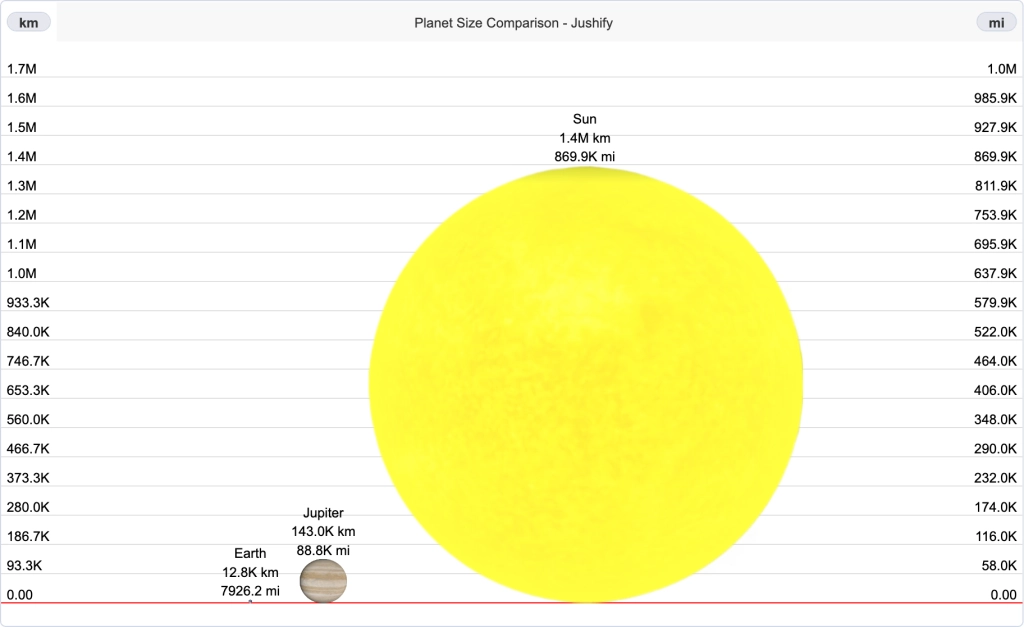
Seeing:
Makes you realize:
👉 How small Earth actually is
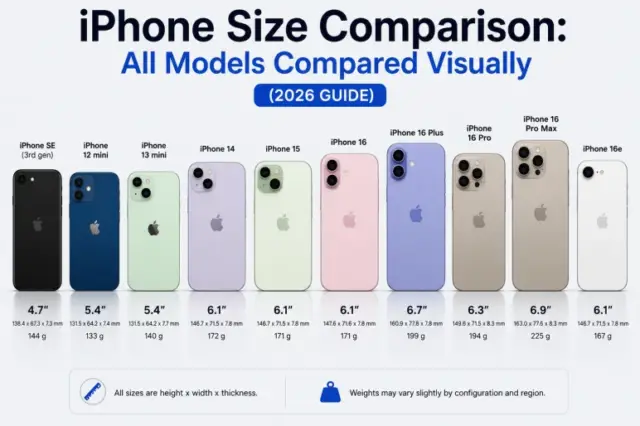
Smartphones are no longer one-size-fits-all.
From compact devices to ultra-large screens, choosing the right phone size directly affects:
A difference of even 0.5–1 inch in screen size can completely change how a phone feels in daily use.
When comparing phones, people often focus only on screen size (in inches).
But actual usability depends on:
That’s why visual phone size comparison is far more effective than reading specifications.
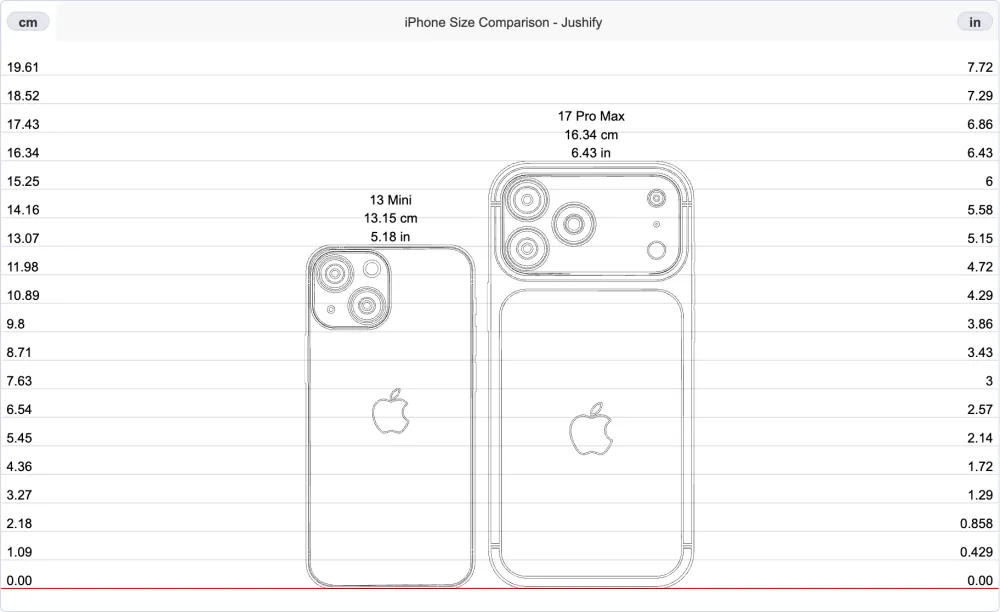
Comparing:
You’ll notice:
Using a tool like Jushify, you can:
This removes confusion from:
👉 Spec sheets
👉 Marketing claims
Always compare phones visually before buying.
Two phones with similar screen sizes can feel completely different in real life.
No calculations needed.
Scaled proportionally.
Compare many items at once.
Beginner-friendly interface.
Works for almost anything.
| Numbers | Visual Comparison |
|---|---|
| Hard to imagine | Easy to understand |
| Requires calculation | Instant clarity |
| Less engaging | Highly engaging |
👉 Visuals remove guesswork completely.
To get maximum benefit:
Compare:
Don’t limit to 2 items.
Avoid mixing units incorrectly.
Use visuals in blogs/social media.
Visual comparison tools are evolving with:
Soon, you’ll be able to:
👉 Compare objects in your actual room using your phone
Visual size comparison transforms abstract numbers into clear, understandable visuals.
Whether you’re:
Seeing the difference is always better than imagining it.
And that’s exactly what tools like Jushify make possible.
A size comparison tool lets you visually compare different objects or heights using accurate scaling instead of numbers.
Yes, you can compare people, cars, furniture, buildings, and even planets using visual comparison tools.
Because visuals provide instant understanding, while numbers require mental calculation and imagination.
They are highly accurate if you input correct measurements and use consistent units.
Absolutely. It helps you choose the right product by visualizing real-world size differences.
Why are some countries taller than others, and what do those height difference really look like?…
Choosing the right iPhone is no longer just about performance or camera quality. Today, one of…
When you set out to compare cars, where does your research typically go? For most, it’s a…
Free, with no sign-up. Add people, characters or objects, change any height, then share a link or download an image or a video.