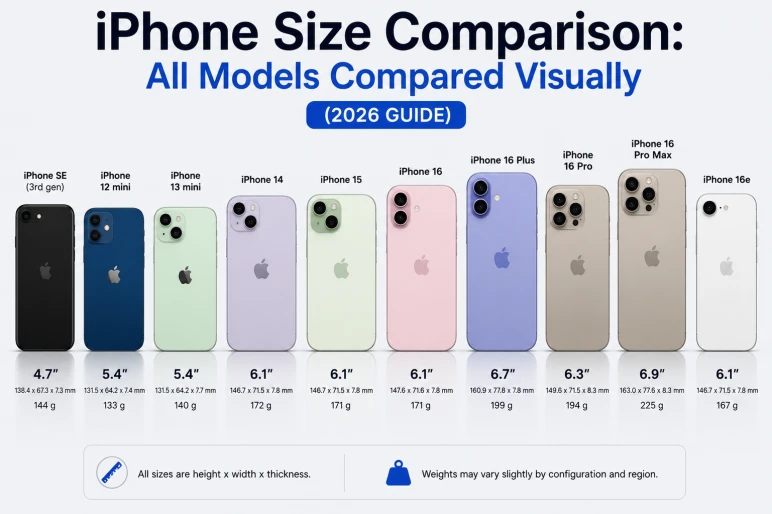
Choosing the right iPhone is no longer just about performance or camera quality.
Today, one of the biggest deciding factors is size.
Some users want:
- Compact phones for one-hand use
- Lightweight devices for comfort
- Pocket-friendly dimensions
Others prefer:
- Bigger displays
- Better battery life
- Larger screens for gaming and media
The problem is that numbers like:
- 6.1-inch display
- 6.7-inch display
don’t always help people understand how a phone actually feels in real life.
That’s why visual iPhone size comparison is so important.
Instead of guessing dimensions from spec sheets, you can instantly compare iPhone models side by side and understand:
- Which one is bigger
- Which one is easier to hold
- Which fits your needs best
In this complete guide, we’ll compare iPhone sizes visually, explain the differences between models, and help you choose the perfect iPhone size in 2026
📱 Why iPhone Size Comparison Matters
Most people spend several hours every day on their phones.
A device that feels uncomfortable can affect:
- Daily usability
- Typing experience
- Gaming comfort
- Portability
That’s why comparing iPhone sizes before buying is essential.
👀 The Problem With Specifications Alone
Many buyers only look at:
- Screen size
- Resolution
- Weight
But two phones with similar screen sizes can still feel completely different because of:
- Width
- Height
- Bezels
- Thickness
- Weight distribution
This is where visual comparison becomes useful.
📏 Understanding iPhone Measurements
Before comparing models, it’s important to understand what measurements actually mean.
📱 Screen Size
Screen size is measured diagonally.
Examples:
- 6.1 inches
- 6.7 inches
But this does NOT represent:
- Phone width
- Phone height
- Overall hand feel
📐 Dimensions
Actual dimensions include:
- Height
- Width
- Thickness
These determine:
- Pocket fit
- One-hand usability
- Grip comfort
⚖️ Weight
Weight impacts:
- Long-term comfort
- Gaming sessions
- Daily handling
A heavier phone may feel more premium but less comfortable for prolonged use.
📊 iPhone Size Categories
Modern iPhones generally fall into 3 categories.
📱 Compact iPhones
Examples:
- iPhone SE
- iPhone Mini series
Best for:
- One-hand use
- Small pockets
- Lightweight feel
⚖️ Medium-Sized iPhones
Examples:
- Standard iPhone models
- iPhone Pro models
Best balance between:
- Comfort
- Performance
- Battery
📲 Large iPhones
Examples:
- Pro Max models
Best for:
- Media consumption
- Gaming
- Battery life
🔥 Visual Comparison: Small vs Large iPhone
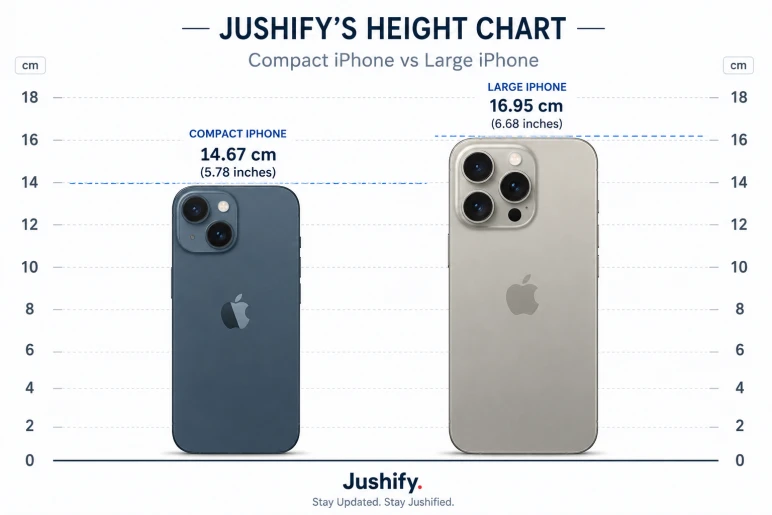
A compact iPhone feels dramatically different compared to a Pro Max model.
You’ll notice:
- Larger screen dominance
- Increased width
- More immersive display experience
But also:
- Reduced one-hand usability
- Higher weight
📱 iPhone Mini vs Standard vs Pro Max
📱 Mini Models
Advantages:
- Extremely portable
- Easy one-hand operation
- Lightweight
Disadvantages:
- Smaller battery
- Smaller display
Best for:
- Casual users
- Minimalists
⚖️ Standard Models
Advantages:
- Balanced dimensions
- Comfortable grip
- Good battery life
Disadvantages:
- Less immersive than Pro Max
Best for:
- Most users
📲 Pro Max Models
Advantages:
- Huge display
- Excellent battery life
- Better for gaming and video
Disadvantages:
- Heavy
- Harder for one-hand use
Best for:
- Power users
🧠 How Screen Size Affects Daily Experience
🎮 Gaming
Bigger iPhones provide:
- Better immersion
- Larger controls
- Improved visibility
🎬 Video Watching
Large displays improve:
- Netflix experience
- YouTube viewing
- Editing workflows
✍️ Typing
Smaller phones:
- Easier thumb reach
Larger phones:
- More typing space
👖 Pocket Comfort
Compact phones:
- Fit easily in pockets
Large phones:
- Can feel bulky
📏 Comparing iPhone Size Visually Is Better Than Specs
Reading numbers like:
- 146.7 mm
- 160.7 mm
doesn’t instantly help people visualize the difference.
Visual comparison immediately shows:
- Actual scale
- Hand feel
- Real-life usability
🔍 Most Popular iPhone Size Comparisons
People frequently compare:
- iPhone Mini vs Pro
- Pro vs Pro Max
- Old iPhones vs newer models
- Compact vs large phones
These comparisons help buyers understand whether upgrading is worth it.
📱 Best iPhone Size for One-Hand Use
If one-hand usability matters most:
Choose:
- Mini models
- Standard-sized iPhones
These are easier for:
- Texting
- Carrying
- Daily comfort
📲 Best iPhone Size for Media & Gaming
If entertainment matters most:
Choose:
- Pro Max models
Benefits:
- Larger visuals
- Better battery
- More immersive experience
⚖️ Big Phone vs Small Phone: Which Is Better?
There’s no universal answer.
It depends on your priorities.
✅ Smaller Phones Are Better For:
- Portability
- One-hand use
- Lightweight feel
✅ Bigger Phones Are Better For:
- Battery life
- Gaming
- Watching videos
- Productivity
🛠 How to Compare iPhone Sizes Online
Using a visual comparison tool makes choosing much easier.
With tools like Jushify, you can:
- Compare phones side by side
- Visualize actual dimensions
- Instantly understand size differences
This is much better than reading spec sheets alone.
🚀 Why Visual Phone Comparison Is Becoming Popular
Modern smartphones are increasingly similar in:
- Cameras
- Performance
- Features
So size becomes one of the biggest deciding factors.
That’s why visual phone comparison tools are growing rapidly in popularity.
📈 Future of Smartphone Size Comparison
In the future, comparison tools may include:
- AR visualization
- Real-world hand simulation
- Pocket fit prediction
- Interactive 3D scaling
Users may soon compare phones virtually in real-world environments before purchasing.
💡 Tips Before Choosing an iPhone Size
Before buying:
✔ Think about your daily use
✔ Consider your hand size
✔ Compare dimensions visually
✔ Don’t rely only on display inches
✔ Test comfort for long-term use
⚠️ Common Mistakes Buyers Make
❌ Choosing only based on screen size
Screen size alone doesn’t define usability.
❌ Ignoring weight
Large phones can become tiring.
❌ Following trends blindly
A massive phone isn’t ideal for everyone.
❌ Not comparing visually
Visual comparison prevents buying mistakes.
🎯 Conclusion
Choosing the right iPhone size is just as important as choosing the right features.
A phone that looks perfect on paper may feel uncomfortable in daily use.
That’s why visual comparison matters.
Instead of relying only on numbers, visually comparing iPhones helps you:
- Understand real dimensions
- See scale differences instantly
- Choose confidently
Whether you prefer:
- Compact portability
- Balanced usability
- Massive displays
visual comparison tools make the decision much easier.
❓ FAQs
Compact and standard-sized iPhones are best for comfortable one-hand operation.
Yes, larger iPhones provide a more immersive gaming and media experience.
Visual comparison helps you understand real-world dimensions better than specifications alone.
Medium-sized iPhones are usually the most balanced and widely preferred option.
Using a visual comparison tool like Jushify is the easiest and fastest method.